Showing posts with label ethnographic design. Show all posts

Monday, June 15, 2026

Design Research in Southeast Asia


Much has happened since my last blog entry. I spent January through July 2025 in SE Asia studying traditional boat design. In the US, I have spent time developing a medical device class and doing industry projects. I have stopped talking about AI because it is all going so fast that the commentary I offered a few years back can't be reasonably added upon at this time. Currently, I don't let AI touch my writing or analysis. I use AI for some graphics and music and I reference its use. I enjoyed putting my poems to music a couple of years ago, largely using AI, and have a YouTube channel set up for it as discussed in my last blog entry.

My field work and subsequent analysis will be published in a book by Penerbit UTM Academic Press soon. It will be entitled, Winds of Change: Innovation and Tradition in the Fishing Boats of Maritime Southeast Asia. Here is a little introduction to that study:

https://canadiandesignnetwork.com/newsletter-article/alluring-design/?utm_source

Alluring Design

canadiandesignnetwork.com

Wednesday, November 3, 2021

Boat Design: Mechanistic and Non-mechanistic Influences


This is an extract from my latest book, Wooden Wonders: Traditional Malaysian Fishing Boats

The presentation of design influences on boats is best introduced by placing it in the context of what ancient philosophers asserted were the three motivators of all human inquiry: pursuit of truth, beauty and goodness. This triumvirate of cognition, aesthetics, and morality offers a framework for looking at traditional design as an attempt to 1) develop a boat that will be safe, durable and functional, 2) express cultural heritage and historicity, 3) incorporate belief systems, and 4) express an aesthetic quality. The first category can be referred to as mechanistic influences and the other categories can be referred to as non-mechanistic influences.

By design, boats place people far out on the water in an unnatural and hazardous environment. Therefore, boats are conservative in their design and often enshrouded by ritual and symbolic elements derived from belief systems. If one is to have faith in a boat when at sea, it seems natural to want to imbue the craft with as much safety as possible, both physical and spiritual. Horridge (1995) notes:

Because the use of them is dangerous, boats are particularly conservative structures and all cultures adhere to their own proven designs. Rigs are more easily copied than hull structures. When changes in design are introduced they are not admitted. In consequence, boatbuilding techniques may survive unchanged for 1000 years or may be quickly modified in a single generation as happens when designs are transferred from elsewhere.

Indigenous boat design knowledge can derive from traditional influences that lie outside the realm of naval architecture. This indigenous knowledge can consider available construction materials and fasteners as well as specific boat applications. This knowledge also leads to design details that affect performance and safety. When asked to explain specifics about a design, traditional builders may respond in a generic fashion, indicating there is no other way to design the boat or the design gives better performance. Construction details have been relayed from their ancestors and deviations from this tradition are considered dangerous (Horridge, 1995).

The details of the boat are ostensibly designed in response to a particular need. For example, the sharp bow allows a boat to pierce waves, a shallow draft allows passage over sandbars and an open transom allows nets to be easily pulled onboard. The overall boat design is dictated by needs for stability, buoyancy, maneuverability, seakindliness, draft restrictions, superstructure, and equipment requirements. However, in addition to these mechanistic elements, boat designs also derive from traditional designs, traditional construction methods, and available materials. In addition to these traditional influences, boat design is influenced by perceptions regarding durability, safety, comfort, and maintenance.

Boat designers make judgments as they contend with many conflicting design issues such as performance versus aesthetics, stability versus capacity, comfort versus seakeeping, safety versus speed, safety versus ease of use, hull size versus operating cost, and fuel efficiency versus production cost. The following sections describe a few important mechanistic factors that may be helpful in considering the photographs and data that follow.


 [o1]Remain as non-italic & bold.


Tuesday, November 2, 2021

Closing Thoughts from "Traditional Malaysian Fishing Boats"


This is an extract from my latest book, Wooden Wonders: Traditional Malaysian Fishing Boats

One quickly becomes defined by one’s discipline as we witness the academic, professional, and even legal walls constructed around disciplines. However, these walls can create an insidious environment where the physical sciences are honored while everything else becomes noise. I have a deep affection for the mysteries revealed by science, but I recognize the physical and life sciences have waded into matters that require involvement beyond science.

Science can also give an incomplete picture of truth. Philosophers have investigated the limits of the scientific method, but science can be blind to the broad swath of culture and therefore fails to provide all data and guidance for culturally appropriate designs. For me to make sense of the value of non-mechanistic design elements I needed to recognize the intangible, scientifically unapproachable aspects of these design elements. Not all questions are scientifically answerable and some can only be judged based on their value to the individual.

Fishing boats are an important part of the cultural heritage of Malaysia. Their role in commerce will necessarily change in response to the dynamic forces applied to the Malaysian society. These boats provide food and livelihood for many. They are designed with care, built with integrity, and reflect the pride and dignity of their builders. This consideration of traditional Malaysian fishing boats was not intended as a nostalgic reflection but rather an investigation of the gritty, every day issues of boat builders and fishermen. These men were motivated by market forces even if they did sense the twilight years of their work. The builders and fishermen I visited were not striving to be curators of old technology, they were living their lives with the mixture of dreams and practical resolve that motivates us all in our labors.


Tuesday, October 12, 2021

Wooden Wonders: Traditional Malaysian Fishing Boats


I had the pleasure of discussing my work with traditional Malaysian fishing boats and my book, "Wooden Wonders" yesterday. You can watch the presentation at:

https://www.youtube.com/watch?v=Hwv23DiaJMY


Thursday, February 4, 2021

Contending with Complex Interdisciplinary Problems using Affinity Congregates


Many innovations come from those in marginal positions in a discipline, and these individuals therefore greatly benefit from the support afforded by like-minded people. James Watson, co-discoverer of the double helix nature of DNA, stated the power of collaboration unequivocally: “Nothing new that is really interesting comes without collaboration”. However, in some groups a dominating person might drive ideation. As discussed previously, group dynamics need to be recognized in group settings. Particularly in the case of new groups, such as in a classroom setting, an affinity congregate allows people to individually express their ideas before becoming engaged in a group situation. This is a small variation of affinity diagraming because affinity congregating focuses on initial, independent problem solving before bringing ideas to a group so that participants may collectively identify affinities. Affinity congregation preserves the independent voice of each student. This approach is intended to prevent group dynamics from taking over the ideation process.

With affinity congregating, the participants are presented with a problem or design prompt, they individually write solutions on a sticky notes or other suitable media. When they are finished writing proposed solutions, the notes are collected and assembled by a moderator and grouped by affinities or themes into an affinity diagram. The themes arise from the data, which is founded on grounded theory. Grounded theory is a method common in the social sciences that allows categories and concepts to develop based exclusively on data and not from predisposed theories.

While these affinity congregations shown by the groupings of notes is subjective, general themes or affinities arise in a logical fashion. A variation of this approach is to have the group identify themes rather than a moderator. In this approach, the group gathers around the notes and identifies logical groupings. The notes are reviewed and duplicate ideas are stacked on top of each other. Finally, the affinities can be discussed and each idea can be critiqued by the group.

Affinity Congregating Technique Summary

1. Problem statement or design prompt.

2. Individuals write proposed solutions on sticky notes.

3. Moderator collects notes and assembles by affinities or themes that arise (affinity diagrams). Alternatively, the group identifies affinities as a team.

4. Duplicates omitted.

5. Group critiques affinities and proposed solutions.

Outcomes of Affinity Congregation

One example of applying this technique to professional practice is addressing the issue of palliative care in the developing world. In this case, I invited two physician colleagues to partner with this investigation. Because we came from different disciplines (design, pain management and palliative care), the congregation technique was used to prevent the board-certified palliative care specialist from overwhelming the pain management expert and the engineer. This cooperation led to identifying four tracks of palliative care: physical, psychological, relational, and spiritual as shown in Figure 4. These tracks were further divided into key concerns and we developed practical treatment options.

In this example, the most common concerns were identified as pain, dyspnea (air hunger), nausea and vomiting, delirium, anxiety, and terminal secretions (‘the death rattle’). The affinity aggregation allowed artificial intelligence driven diagnosis systems to inhabit an equal space as recommending paracetamol or diclofenac for pain relief. This technique worked well in this interdisciplinary environment because we concluded with specific recommendations as well as the somewhat surprising result that the patient care should be the responsibility of a loving caregiver rather than a medical professional.


Figure 4 – Integrative palliative care factors.

From:  T. Ask, “Engaging Creativity: Classroom Exercises for Enhancing Engineering Students' Creative Self Identity,” 2019 ASEE Zone I Conference & Workshop, Niagara Falls, NY, USA, April 2019, https://peer.asee.org/33791.

And     T. E. Ask, J. Boll and A. Nesbitt, “Steps towards Integrative Palliative Care in the Developing World,” Design for All Institute of India, Newsletter Vol. 12, No. 3, p. 61, 2017.


Tuesday, November 3, 2020

The New Shopping Mall


What will be the new mall? We didn’t go to the mall to shop, we went to be around people, color, and activity (with some fun shopping along the way.) We wanted to touch clothes and be surprised by displays and new products. We pine for a communal experience and the physicality of the real world. Maybe malls are churches of consumerism, but I think they are much more. We smell perfume and hear laughter with the gentle wash of shuffling feet. We see colors, we feel textures, and peek around displays.

It was a place to be alone together.

We no longer share experiences at the movie theater nor do we watch the same television shows. We share experiences with our tribe, nobly led by influencers and celebrities. We live a brand lifestyle.

Shopping now belongs to the internet, but we still need to get together. We don’t go to coffee shops for coffee – we go to be with people. We go to immerse ourselves in an environment where pleasant aromas are an honored perception and the pseudo-intellectual vibe compels us to write in our journals and have deep conversations.

However, we need a new mall, a destination to escape the heat or the cold and be with other lonely hearts. It was a place to play make believe games with my kids while surrounded by a safe, pleasant environment. The new mall might be a gaming center with unique foods. It will have some infrastructure that justifies our trip. Maybe VR and fresh spices. Maybe live entertainment and interactive games. These will draw us together as we enjoy our wearable technology and play communal games, pausing to nibble on wasabi-infused couscous on a bed of sun-dried kale.

Whatever it is, we need a new shopping mall experience.


Thursday, November 21, 2019

Lusting for Internet Access


I’m involved with the maritime industry and learned of a recent case of a ship grounding caused by something remarkable. The officer on watch steered the ship near the Swedish coast so the crew could get better phone signals. Yes, a ship gets grounded, leaks oil, and is completely scrapped because of a desire for better coverage.

The lust for internet access and a small antenna caused a ship to be destroyed. This is in 2019 and in Sweden. The lessons are obvious and it reminds me of the African fable about the mouse that took refuge in an elephant’s trunk causing the elephant to finally die of thirst and hunger.

The elephant had destroyed the mouse’s nest several times so the mouse studied the elephant and learned how dependent he was on his trunk. When the elephant fell asleep, the mouse crawled into the elephant’s trunk. The elephant could not dislodge the mouse from his trunk and the elephant finally succumbed to thirst and hunger.

To be fair, alcohol and inattentiveness contributed to the grounding…

The Nautical Institute noted this was “a perfect storm of how not to run a ship.”


This is a summary of the incident from the Nautical Institute, the official report is SHK RS2019:04e

Navigation close to the coast naturally demands the OOW's utmost attention. Fatigue, distractions and of course alcohol or drugs are all enemies to safe navigation, yet still we hear of ships, crews and the environment being put at risk because basic rules have been ignored.

Early one morning, the OOW of a car carrier altered course to port to follow the coast so crew could obtain a better phone signal. He failed to update the vessel's voyage plan and then returned to his administrative work, merely glancing at the ECDIS occasionally. The lookout was also busy with other tasks, the bridge navigation watch alarm system (BNWAS) had been turned off and the S-VDR was not working.

Eventually – and perhaps inevitably – the ship grounded, resulting in an oil spill. When refloated it proved to be so severely damaged that it was declared a total constructive loss and fit only for recycling.

Subsequent investigation showed that the OOW had drunk alcohol before taking over the watch and was intoxicated. Both he and the lookout were distracted by other tasks, and the switched-off BNWAS was unable to perform its 'safety net' function.


Saturday, June 29, 2019

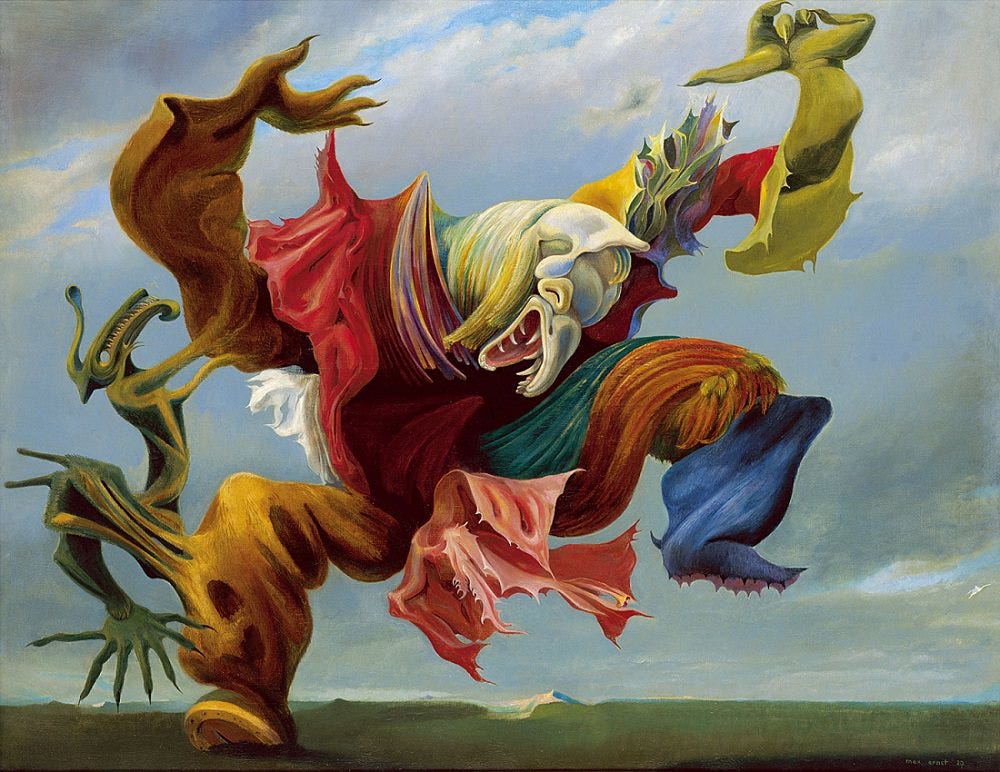
Surprise in design


Image result for surrealism
Design works outside science. Science is a useful tool, just like language is a useful tool. But science is based on assumptions of rationality and empirically driven truths that can be drawn from the apparent chaos in which we live. Design embraces chaos and extracts features from it that appeal to humans.

We can use qualitative methods, such as ethnography, and artistic insights to create product appeal to groups different than ourselves. Research requires an articulated framework describing an understanding of how the world works and how you can learn about how it works. It should (but rarely does outside of dissertations) require a positionality statement also because your position with respect to data influences acquisition methods and interpretation, among other things. 

As a Christian, I don’t follow “methodological naturalism” as a guide, I believe in God’s personal involvement. However methodological naturalism can’t handle the notion of irrationality. It has a faith component, namely that the human mind is rational and the world has "closed regularities", meaning that there are no exceptions to scientific laws.

The words art, design, and craft have specific meanings. Design can mean a purposeful development of a functional product. Industrial design also considers the artistic influences that create appeal beyond the functional. Industrial design embraces ethnographic methods that aid in designing things appropriate for people who are different than the designer.

Designing things in the tradition of industrial design, taps into both functional (mechanistic) and “non-functional” (non-mechanistic) elements. But the non-functional elements in particular, can be rooted in faith and worldview issues. The non-functional elements are where art flows into design, and this can involve surprise.

I love surprise in design, it has delightfully irrational elements that derive from outside of the weight of science. Pleasant surprise is a beautiful element in design.


Friday, October 12, 2018

Ethics in Design


Often discussions of ethics get very academic and consider high visibility failures such as the space shuttle Challenger’s O-rings or Volkswagen’s emission scandal (“Dieselgate”). However, most designers work for companies that are not going to have that kind of oversight. Nobody cares about the shortcuts little Company XYZ takes. No regulatory body is going to bother them, no lawyers will knock on the door, and the media will not pursue them. However, when an ethical issue does arise and an employee does what he or she thinks is ethical, some companies will retaliate. The employee is hung on a pole with the carcass left to warn others, embodied in stories and corporate culture. When others think about ethics versus job security in this type of culture, their feet might quiver and they will not feel like they have sufficient job security to follow their convictions.

Small businesses can have the same challenges if the owner has no ethical scruples. A company’s ethics can be determined by one person. Even though the sense of widely held ethical standards is often supported by statute or regulation, these are far from comprehensive, and the agencies that enforce them are not omniscient. Moreover, regulatory agencies are not nearly as effective in rooting out unethical behavior as a culture where the boss explicitly states that unethical behavior is unacceptable and acts in accordance. This executive commitment is supported when coworkers report infractions and employees feel their jobs are secure when they decide to act ethically. It is further supported when individuals who take unethical actions are individually punished. This type of culture makes ethical standards more than a memo from the CEO or a poster on the wall.

However, CEOs contend with intense financial pressures. Designers don’t work for free, and someone has to make sure money is earned. Sales and marketing personnel have similar challenges. Even though designers often lock horns with them, try operating a profitable company without sales and marketing employeesyou will feel the brute wall of market forces slam against your stylish studio.

Ethical standards need to adapt to changing technology. Artificial intelligence, the internet, and nuclear energy are examples of technology that require a rethinking of ethical standards. However, these are difficult issues. Who gets to decide when artificial intelligence, virtual/augmented reality, and nuclear energy are used for good or bad? Librarians (and others) have been trying to protect intellectual property for decades, but technology such as photocopiers, digital cameras, and the internet have made this goal very difficult.

Designs can have far reaching social impact. Many lives have been ruined or opportunities crushed by benign things such as pain medicines and video games. The internet presents us with images that we don’t ask for, artificial intelligence curates our entertainment and information searches, and there are many enticing technologies that are ostensibly more attractive than a walk in the woods. There is a long history of technology intended for good but used for evil, from nails and chains to electricity and the internet.

This is an excerpt from my new book:

Check out my YouTube Channel too!


Tuesday, October 2, 2018

Beauty at the end of World War I


WWI ended 100 years ago. It brought ugliness to people’s lives and the nature around them. Ugliness and beauty – we don’t like to talk about these attributes yet we step on cockroaches and not butterflies.

Several articles have appeared recently about the artist Anna Coleman Ladd’s work on making masks for injured WWI veterans. The facial disfigurements created sad scenarios in which soldiers did not want to visit their mothers. Soldiers’ own children “fled in terror” at seeing their faces. Ladd’s work was appreciated by injured soldiers. One soldier wrote, “Thanks to you, I will have a home. The woman I love no longer finds me repulsive, as she had a right to do.” (1)

Being comfortable with oneself is important; however, we do find some deep appeal in beauty – however that is defined. We preserve what is beautiful in museums and throw the ugly stuff in the garbage.

Fortunately, we can see through surface features. I had a friend who had a very large mole on his face. After knowing him for a while, I no longer saw it. Now I don’t remember where it was.

I have worked with people who have disfigured features and overcoming repulsion is the first step in developing compassion. However, repulsion is something we consider even when awash in self-empowerment education. The struggles with acne, warts, and bad teeth are truly difficult for many. More profound disfigurement can cause even deeper struggles.


We wish to surround ourselves with what is beautiful, we don’t aspire to wear cubic zirconium and wrinkled clothes. Designers need to understand the notion of beauty and its connection with many fundamental elements of design.

Human faces are symmetrical left to right but not top to bottom. We find this interesting and appealing. Variety attracts, sameness is boring. Perfect symmetry and perfect skin appears fake, we are intrigued by small amounts of asymmetry and “flaws”.

Most importantly, we expect to see what we are used to – a visual stereotype. Therefore, we are fortunate that Ladd and other artists and designers restore beauty to the world around us. Even the damage of WWI is replaced by new births and nature’s recovery of battlefields.


(1) Alexander, Caroline. “Faces of War.” Smithsonian Magazine, February 2007.

Tuesday, July 17, 2018

Stop Sketching?


“Sketches are misleading. The digital process is liberating. In one week I can have a well-resolved design based on a data set, not just a drawing.” (1)

This is according to Sasha Selipanov, designer of the Bugatti Chiron and now chief designer of Genesis Advanced Design.

The role of software in design will be an ongoing discussion. However, MotorTrend had an interesting presentation on the issue comparing Silipanov view with a couple of designers who were fond of physical media and concerned about computer involvement in the creative process.

“The seductive speed of the computer makes people think they can make soup from scratch in 15 minutes. But the soup you get sucks.” opined Jerry Hirshberg, founder of Nissan Design. (1)

This may sound like a generational battle but there is more to it. These debates encourage humility. You don’t find unity in what great designers love and hate as far as design tools. There is no “best” design method and no “best” design tool.

We are fortunate to have a number of digital and physical tools available that allow the designer to pick what works best for the application. You don’t make colorful paintings without a full palette. The artist blends, tints, shades, and glazes to get the desired effect. The same is true with design tools.

Don’t let anyone tell you what the best conceptual development tool (or method) is for you!


1. Rechtin, Mark. “The Human Touch, Does CAD software dream of electric cars?” MotorTrend, July 2018, p. 25.

Saturday, February 24, 2018

Jungle Rivers


I have spent a lot of time overseas and in varied environments but jungle rivers always fascinated me. When I was working in Venezuela, I had to cross an area where vegetation had grown over a slow moving river. I had to walk on roots while getting swarmed by mosquitoes and ants. The trees had long spines so I had to use a machete to catch myself. If you slipped off a root you plunged into the black water. It inspired me to write a short poem that captured my battle with nature:

Jungle River

The confluence of elements made it known,
That this was a world all onto its own.

No man will pass without our scar,
A vision of hatred to be carried far.

Leave us alone for you cannot prosper,
In the overgrown river we will conquer.


In contrast, there was a time during this Malaysian study when my family was swimming in the Lemanak River in Sarawak, Borneo and I appreciated that it was a perfect time. When my kids wanted to be with me and the brown, jungle river flowed with adventure. Poetry is often where I park my most important memories and this experience prompted me to write the following:

Lemanak River

Vine wrapped ceiling
Giant timbers reach
Palette of greens
Sticking to the sky

Muddy river droning
Current always on
Moving melody
Licorice magma flow

Far from home bed
Sliver of web’s reach
Swimming with the children
They trust my steady legs
Laughter blends with:

Water gushing,
Insect buzzing,
Primordial smells creeping,
Wet air washing,
Sunlight straining.

My arms pull Elayna and steady Eric
And these moments rage
Down the river flowing.

Is this the perfect time?


Traditional Fishing Boats of Malaysia


I have always loved boats. I love sailing them, rowing them, building them, drawing them, and studying them. When I first encountered the strikingly beautiful boats of Southeast Asia over 30 years ago, I was impressed at the use of sail and wood in commerce. Now the sails are largely gone but boatbuilders and fishermen’s intimacy with trees and traditional knowledge remain.


The construction of these boats is fascinating. Traditional Malaysian boats are normally built without drawings and from the shipworm and rot resistant hardwood chengal. The keel, stem, and stern are made from massive timbers into which are carved receiving surfaces for the rest of the framework. The planks are bent either by the simple application of force using clamps or by heating them with fire. The planks are fastened to internal frames. 

 
On the east coast the planks are connected using trunnels (wooden dowels) typically made from iron wood. This joining technique is also coupled with a traditional method of sealing the planks in which a layer of melaleuca tree bark is pushed over the trunnels. Adjoining planks are hammered over these trunnels. In contrast to this traditional technique, plank sealing is produced on the west coast and some areas of the east coast, by pressing rope between the planks. The boats have distinctive bow and stern features as well as a myriad of delightful idiosyncrasies that make them special.

Wednesday, October 25, 2017

Medical Care on the Edge: Redesigning Care Across Cultures


This is a portion of my talk on technology and palliative care. I presented along with two great physicians, Drs. John Boll and Alex Nesbitt.
Let’s first consider the development of both human expertise and technology. If we posit the notion that the ability of medical personnel has improved over time to get closer to some notion of perfection we can also then consider that technology, in a general sense, has improved also. In many cases the technology has helped the doctors, in some cases advances in understanding have helped doctors. However, in the end doctors do not achieve a level of perfection, and technology will never be able to completely replace doctors, which is something we will consider later.
When we consider medical care for resource poor areas we have three approaches: more healthcare providers, technology assisted care, and autonomous care. I want to explore the notions of technology assisted and autonomous care. We can get defensive about autonomous medical care but this inquiry relates to places that don’t enjoy the medical infrastructure that we do.
For example, with a Mars mission, we may have to rely on a lot of technology and minimally trained personal. In Boston, you trip over doctors. We naturally resist technology’s incursion into medical care because people recognize the empathy and sacrificial attributes brought by real people. However, technology can, at the least, assist doctors in diagnoses and the development of a patient care plan.
One element of technology I would like to talk about is artificial intelligence, which mimics human knowledge and cognition. It can use rules of thumb and learning capabilities to make recommendations. It can also include sensing technologies that mimic human abilities from seeing to speaking.
It uses rules of thumb, called heuristics, and confidence factors to come up with a conclusion. That is what these IF/THEN and CF statements represent. But machines can’t handle problems that haven’t been thought of, they can’t think of “what if”.
Some appealing prospects for resource poor areas are to use an artificial intelligence system to suggest a diagnosis and treatment using a dialogue with the health care provider or family member, which I will call the “small black box”. A grander approach is to use a system of AI that learns about the patient over time, often called deep learning, as well as other inputs. I will call this the “big black box”.
The small black box uses patient signs and symptoms and rule-based/heuristic analysis to generate a suggested patient treatment plan.


However, let’s consider what could occur beyond using rules of thumb for diagnosis. Neural networks allow software to learn by identifying patterns from a mass of data. They have been used in the financial world for a long time but how far can they extend into medicine? A recent article in Nature illustrates the potential for these deep learning machines to go beyond heuristics.
The researchers considered melanoma diagnoses. This diagnosis is typically guided by rules described by the mnemonic: ABCD. Where they consider asymmetry, borders, color and diameter of the lesions.


Researchers went beyond rule-based diagnoses by using 14,000 images previously diagnosed by dermatologists. Could an AI system categorize the images as benign lesions, cancerous lesions and non-cancerous growths? The AI system was accurate 72% of the time.
This work was followed up by a test set of 2,000 biopsy proven images. These were fed into the neural network. They compared the computer findings with dermatologists’ conclusions.
This graph shows the performance of the neural network system versus dermatologists. You can see the wide range of assessments by the dermatologists but generally the AI algorithm was superior.


However, I recognize this might be considered a simple, visual evaluation far different then the variegated nature of pain and palliative care.
I would like to introduce an autonomous diagnosis and treatment system that is a futuristic concept but offers potential in resource poor areas. This system would use the small black box AI system with its heuristics and patient inquiries along with non-invasive measurements. In this big black box, the system receives patient signs and symptoms every year and learns about the individual patient. By this process, the black box learns about the peculiarities of the patient and can recommend additional required procedures or treatment plans.
Noninvasive evaluations would obtain data from head to toe, perhaps including brain imaging along the way. What might this look like? Perhaps it is like a space suit or a gelatinous bath. Maybe you would walk around like Darth Vader for an hour, I don’t know.  
However, there is something missing. Namely the patient’s distinctive community and beliefs. Hard data can only go so far. Cultural norms and spiritual needs must be part of the mix. Designers use ethnography to gain this kind of nuanced insight. Ethnography usually relies on observations and interviews to develop a textured understanding of people. This information can also be part of the black box. In this way, the black box can understand the presentation of pain, the importance of dignity, and the elements of faith traditions that might not be otherwise considered in the ‘hard science’ aspect of artificial intelligence.
Ethnographic data is usually obtained by observation and surveys. We are all ethnographers of sorts, we quickly learn to read people and develop insights. For example, this can be summarized by Dr. Nesbitt’s ongoing question for his patients, “what do I need to know about you to so that I might treat you better?”
We all carry our cultural values and past experiences with us. This can make it difficult to see things through someone else’s eyes. For example, consider the arrow hidden in the FedEx logo.
Using AI for patient care does present problems. It can effectively program in prejudice so that the ethnographic data that makes sweeping conclusions such as “a certain population collectively care for the elderly” doesn’t always work. You could well have a case where an elderly person is ostracized for a variety of reasons that ethnographic approaches might not capture.
In addition, data from individuals becomes part of some sort of database that can present a myriad of privacy issues.
Finally, there is the impact of a machine replacing a human in any way. It is an affront to our pride, identity perhaps even dignity.
Therefore we believe that the output of AI, even a comprehensive “big black box” system needs to be moderated by a loving caregiver. Someone who has a relationship with the patient and can deliver automated treatment plans through the affectionate mind of a caregiver.


This is a democratization of medical care where a minimally trained but loving caregivers have the tools to execute a palliative care plan.
Fundamentally we believe that in resource poor areas, the best person for supervising medical care is a person who has a caring relationship with the patient. Technology can act as an adjunct to allow them to do a better job.
People have the distinctive ability to empathize with a patient. We also recognize and appreciate the personal sacrifice given by a caregiver. Additionally, people have the wonderful ability to develop creative approaches that machines will never obtain.