Showing posts with label inventing. Show all posts

Tuesday, October 26, 2021

Sleeping breaks chains and opens creativity


Dreaming allows a daily disconnect from saturating sensory stimulation. The breaking and shrinkage of the dendritic spines in our neurons is a slow task, one that can be nurtured by sleep. Sleep induced forgetting can allow new connections that arise in unexpected ways -- ways unconstrained by memory.


One insight into changes of physiology and its affect on artistic abilities can be seen with the changes in Willem de Kooning's paintings as he contended with Alzheimer's disease. The paintings became less variegated and he embraced simplicity. However, art experts considered his latter paintings to be appropriate parts of his oeuvre. His disease had been migrating from his hippocampi to the upper reaches of his cortical processing. However, his lower cortical hubs, where colors and contours are processed, were thought to be unaffected. He created in a different way.

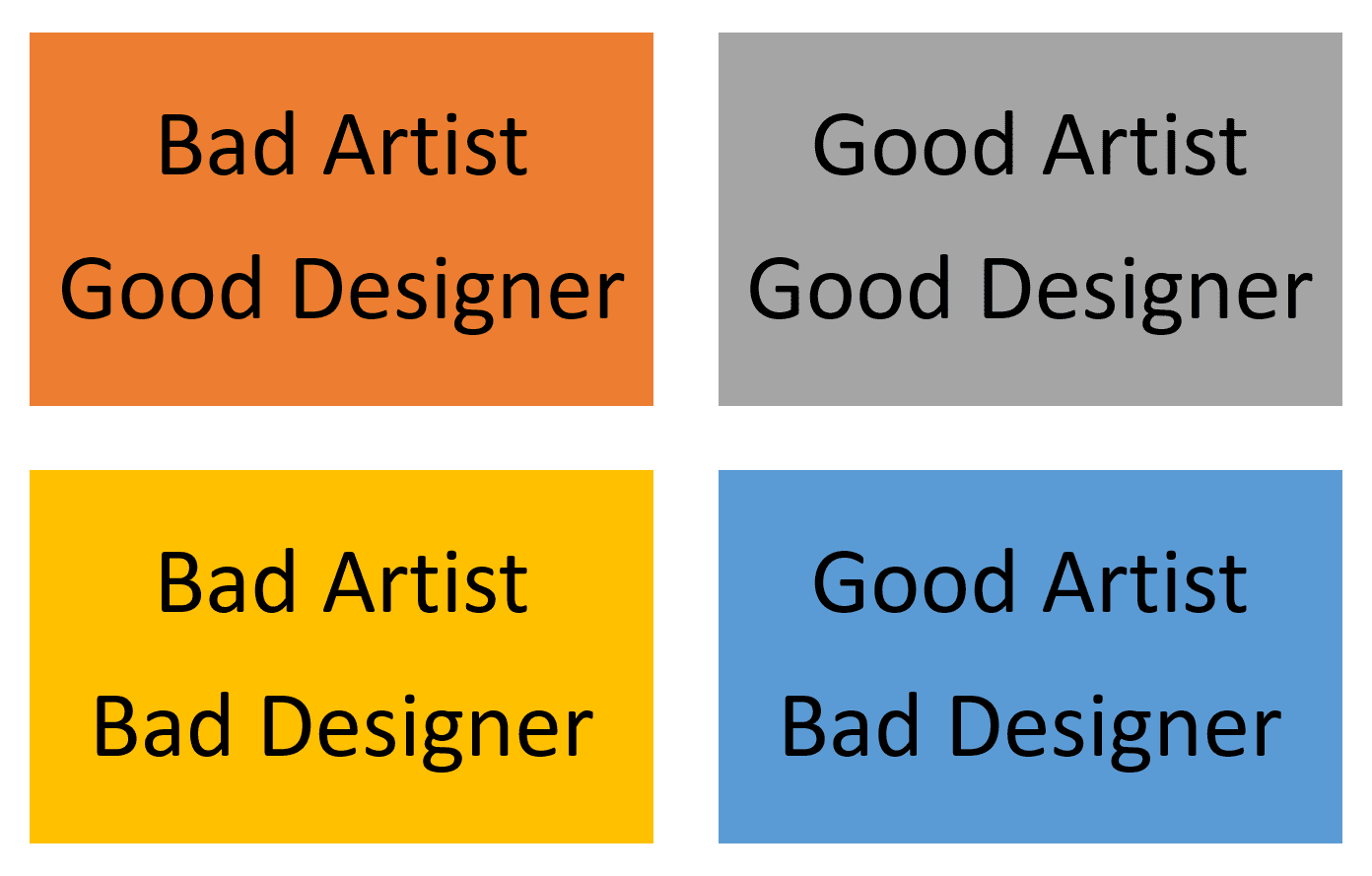
Claude Monet's "blue period" is a similar artistic response to physiological changes. Perhaps his photoreceptors had less sensitivity to blue light so he over-saturated blue hues to produce the image in his mind. Therefore what we see is not what Monet saw. Is this the case? I don’t know, but I think there is a lot of this occurring in the world of creative expression where art and design have the momentum of the artist and designer pushing them into a higher level of execution than they deserve. At least Marcel Duchamp made fun of this attitude.

Sleeping's effect on dendritic spines is an interesting peek into the physiological encouragements for creativity. Dream on!

Thursday, May 27, 2021

Adventure Democratized – by design


Navigating on the water has become remarkably like playing a video game. You keep your digital boat image in the digital white area of a digital map. I have been sailing many decades and remember the old days of boat navigation. These were bad old days. You were more tense. You would determine your position as best you could and plot a direction that was safe to travel. You would do this with a paper chart (map) and parallel rulers. You would determine a range of directions (bearings) that were acceptable and those that weren’t. You considered current (and leeward movement for sailboats) and try to offset these invisible movements. If you could see visible markers, such as buoys, you were in pretty good shape although the current and leeway could deceive you. When you could see two navigational markers you could precisely locate your position and that was thrilling. Otherwise, you were not exactly sure of where you were. Your depth sounder gave you some idea of what was going on but it could not be fully trusted in silty waters. You struggled with how fast to go when things got tight. Running aground at anything but dead slow is a big problem. Sextant sightings were fine in the open ocean but not around hazards.


I don’t miss the tension of analog piloting. It was a challenge and had some visceral thrill (we are going to run aground!) You were still dependent on technology, but it was charts and navigational aids. This is not much nobler than GPS and electronic charts. However, I guess you are more prepared for power outages and digital deaths. I also know high speed Morse Code, having been a ham radio operator for many decades. However, this ability has not helped in any way for the last few decades. It is a little sad when your skills are no longer important, but that is how life goes. Don’t love anything that won’t love you back.

I recently finished Dana’s, “Two Years Before the Mast” which recounts a trip from the US East Coast, around Cape Horn and up to California. It was a more interesting read than I expected. Now you can view California’s nature on YouTube. When Dana was traveling in the 1830s, you might have to wait a week in the raging seas to get a wind shift so you could actually get around Cape Horn. Losing your ship for any reason meant you were likely to die or at least be stranded. The saddest part of sea life at that time is the men were stuck in their position. They had little hope for anything better. I can’t imagine not having hope. Hope is fueled by wonder and in turn fuels ambition and action. Losing hope takes away a deep part of human essence. 

Secret knowledge closes doors. Modern navigation turned my old skills into nearly useless relics, but reducing the stress of boat navigation is a sweet change and makes boating more accessible to everyone – adventure democratized by design. Navigation is a small example of the doors opened by design and technology. Designing both technology and its integration into purposeful systems has allowed people to do wonderful things, from visually hopping on their drones to accessing the world’s greatest library on the internet. 

I don’t know if “purposeful systems” is a real term, but I like it. Only humans can have a purposeful vision that brings technology together by design. Adventure democratized reminds me of rock climbing, kayaking, and backpacking. These are some of the inexpensive ways to gain access to nature’s wonders, but that is another story…. 


Thursday, February 4, 2021

Invention and Philosophy


Science seeks to investigate the sentient and identify truths within that realm. Although making, and design in general, seek to identify that which works, we run our hand along the guiderail of science so the philosophies of science are a relevant framework for makers. For example, exploring designs that might parallel those considered outside "normal science" or endanger an intellectual ecology can lead to resistance within the engineering and design communities.

Makers are comfortable with abductive reasoning but tap into positivism with alacrity. Moreover, nonmechanistic elements of design and building are a part of the maker movement. This includes creating things that are visually appealing, connected with a material culture, and communicate values. The process of building can also be an expression of filial piety or social dynamics and can be infused with improvised and planned agents. The joy of the designing and building process can be of greater importance than the object’s utility – the world of hands-on design teaches the heroics of the nail gun, the intimacy of the soldering iron, the magic of casting, and the crunching sound of failure. Makers know the dance of deep thinking and wonderful journeys.

From: Ask, T. E. (2016). Philosophical Foundations of the Maker Movement. Paper presented at the The Fourth International Conference on Design Creativity, Atlanta, GA. 

Monday, July 27, 2020

Time Tested Designs


Here are some thoughts about one bad design and a few good ones. 


This is what happens when you don't understand users and subordinate function to form. The G4 Cube was a commercial failure even if MoMA likes it. It was a commercial failure for good reason – it didn't work well. The computer would overheat and the gestural controls didn’t work correctly. The high price diverted consumers’ money from other purchases.


Inefficient designs contain a lot of embodied energy and consume resources that could have been used elsewhere. Embodied energy is the energy (and pollution) associated with a product, including stuff you don’t think about such as mining, transportation, administration, disposal etc. Bad products that are expensive and soon discarded always have a high embodied energy.


Here is the how it was released (20 years ago this month!):

MACWORLD EXPO, NEW YORK—July 19, 2000—Apple® today introduced the Power Mac™ G4 Cube, an entirely new class of computer that delivers the performance of a Power Mac G4 in an eight inch cube suspended in a stunning crystal-clear enclosure.

“The G4 Cube is simply the coolest computer ever,” said Steve Jobs, Apple’s CEO. “An entirely new class of computer, it marries the Pentium-crushing performance of the Power Mac G4 with the miniaturization, silent operation and elegant desktop design of the iMac. It is an amazing engineering and design feat, and we’re thrilled to finally unveil it to our customers.”


Old designs that show how it’s done 

It is a shame to be negative all the time. Hopefully love and creation wins over hate and destruction. Therefore, to offset my negative statements about the time-failed Apple G4 Cube, I wanted to offer a few old designs that are the opposite. They work great and have held up over time. They are the Cavendish banana, the offset snow shovel, and the Citroen DS.


A banana is a design? Yes, welcome to the 2020s – designers design more than toasters. We don’t have to be stupid about things that don’t involve a pretty product wrap. We understand taste, tactile response, interactions, packaging and all the things that go into a good banana. Joseph Paxon understood these things too when he designed his banana, which also happened to be resistant to the mold that wiped out all the Big Mike (Gros Michel) bananas. It was a compromise – Paxon’s Cavendish banana didn’t travel as well as the Gros Michel because of its thinner skin and it tasted different. Paxon got it right though, the Cavendish has dominated the banana export market for over 60 years and lets me make smoothies every morning.

It seems presumptuous to assert the importance of industrial design in genetics, but design is design. If you get the right people and the right tools and you can do anything. 

The offset snow shovel is more expensive and harder to store than a standard snow shovel, but it works well. A simple design change that answered the question, what is the most ergonomic design for the user? Let’s do that, the designers thought. They ended up with this ugly, awkward shovel that some people hate and some people love, but it has lasted the test of time and it works well.


I loved the Citroen DS when I first saw it. It has an exquisite blend of aesthetics and function that shows how traditional industrial design can work. 

Beauty
The effect of beauty is easier to consider than its essence. We respond to beauty and we desire to protect it. As a Christian, I move the notion of beauty can be moved into the theological domain. Inner beauty are those things that look like Christ, external beauty are those things that look like the Garden of Eden.

In design, I prefer to think of allure rather than beauty. Moreover, art should be gently cleaved from design. Art should not be dragged down by the mechanistic concerns of design. Styling is not art, and it is not industrial design. Styling is a part of industrial design and an important historical foundation. Styling can probably be considered the foundation of design, but in the 21st century design is much more than styling.

I hope a three-to-one good to bad design ratio is an uplifting view -- I don’t wish to be cranky and negative.

Monday, May 27, 2019


Engineering for Industrial Designers and Inventors made it to the Best Product Design Books of All Time

BookAuthority Best Product Design Books of All Time
I'm happy to announce that my book, "Engineering for Industrial Designers and Inventors: Fundamentals for Designers of Wonderful Things", made it to BookAuthority's Best Product Design Books of All Time:
https://bookauthority.org/books/best-product-design-books?t=cnz1vz&s=award&book=1491932619

Saturday, May 25, 2019

STEAM Education Hurts Art


Leave art alone. Why has art gotten drawn into STEM education, producing the cute acronym STEAM? Is art the decorative box that you put technology into? Have artists devolved to stylists?

The problem with STEAM is that art is pulled in as an afterthought, it is anchored to something not of its own making.

Art is often connected to technology, whether paint pigments or casting processes. However, art should not be constrained by these technical matters. Art merely uses the tools of technology. Technology shouldn’t use art.

Every year, my students and I make and launch rockets. The science is pretty simple: make everything aerodynamic and keep the center of pressure behind the center of gravity. There is no math. It is a lot of fun and it is always magical to touch the sky with rockets. However, it is not really STEM education. It is building stuff and having fun.

Launching a rocket or flying a drone is not STEM education, it is using technology. The acronym STEM is problematic in that it gives equal value to all subjects and suggests a sequential movement that is wrong. One must first understand math and science before moving to engineering and finally technology. Using technology has nothing to do with understanding the science and math that undergird it. It is unwise to equally couple the easier insights of using technology with the more difficult challenges of understanding science and math.

Technology is more important than science and math for most of us. We want X-ray technicians to be expert practitioners on safely operating X-ray machines. We don’t care if they know calculus or physics. But our educational system is locked into developing structured, theoretical foundations for professions.

Interdisciplinary study is good but we should study MSET and A instead of STEAM. Maybe MSET&A education is too hard to pronounce, let’s call it design education and move on.

And one more thing…

While it is easier to define what art is not, the Oxford English Dictionary commonly uses terms such as creative expression, beauty and emotional power. However, non artistic expressions can be creative, non artistic expressions can be beautiful.


One of the OED’s actual definitions is:

The expression or application of human creative skill and imagination, typically in a visual form such as painting or sculpture, producing works to be appreciated primarily for their beauty or emotional power. https://en.oxforddictionaries.com/definition/art


Rocket party: STEM-like activity but actually model building and fun.
Painting party: Art with nothing to do with STEM.

Birds nest: I took this photo in my yard today. Is the bird an artist?

Friday, November 9, 2018

Humility in Design


Boats amaze me.

Borders dissolve and dreams arise as they take you where you want to go. Boats have personality and character infused by those that design and build them. Living in Pennsylvania, it is interesting to look at our namesake Navy ship, the troublesome, original USS Pennsylvania. She was the largest sailing warship built in the US.

She was started in 1816 and finished 21 years later in 1837. Almost...  Over the protests of the locals, she felt the ocean swell briefly as she sailed out of her namesake state on her way to Norfolk, Virginia. There she was dry docked so the hull could be covered in marine growth resistant copper.

The USS Pennsylvania was a huge ship for her time, with four rows of gun decks carrying up to 136 guns. She was 210 feet long, with three masts and a displacement of 3,241 tons. It took a huge crew of over a thousand to operate her.

She was considered by some “the pride of the Navy and the honor of our Union” but was awash in political intrigue and criticism for her expense, antiquity, and lack of purpose. It was a project that would not die. Finally, she was burned at the onset of the Civil War in April 1861 to prevent her use by the Confederacy. A sad life for a great ship.

The USS Pennsylvania acted as a floating barracks for most of her short life, much like the ship pictured above.

Imagine the designers and builders who infused her with their talent, sweat and bruised knuckles. This was a great project to show off to family and friends. Something bigger than themselves. Something that could inspire others. However, it never amounted to anything important. It was basically a jobs program. Another humbling lessons for me as I flounder about pursuing greatness.


My son in his boat, built from what was laying around this pond. A great design and build project, letting him go where he wanted!


A vain photograph of my wife and I with our charter boat, which I neither designed nor built.


Friday, October 12, 2018

Surprises and Trends


A light-hearted summation of things that surprise me and a guess at a couple long-term trends. Food for thought!

Surprise
  • How we gave away private data to anybody who asked or promised us a little treat.
  • Continuing to use astronauts (and fighter pilots).
  • Bulky smart phones have not yet been replaced by smart apparel.


Long term trends
  • Nomadic workforce. Groups of digital nomads who take their tiny houses and move with the weather, perhaps as entire communities.
  • Biological revolution will follow the IT revolution. Customized organic substances will heal, protect, communicate, and build for us. Genome editing is just the start.


Tuesday, August 7, 2018

Designing with Conviction


Designers create order out of chaos, but design is not science. We need more than science and engineering in our quest to manipulate our environment.

Conviction versus Doubt

Doubting is easy, conviction takes work. This is true in most parts of your life, from religious faith to writing fiction. Doubt is nurtured by laziness and cynicism. Conviction about what you believe and your course of action takes guts, work, and humility. It may require going against the cultural currents and will cause grief, frustration, and a lot of work. What do you really believe? What do you think is the right approach? These are questions which are easy to ask but are difficult to answer.

Running around being cynical and doubtful is not a virtuous state. Once you are convicted of something, you need to work it out in your own mind so it is not a conviction that is contrary to evidence. How do I know if I have a good idea? Part of the inquiry can be mental, thinking through the design carefully, but part of validating your conviction is experimenting and testing. You have to build the thing you are designing and test it. It doesn’t have to be a high-quality prototype. It just has to be something physical that you can work with. Many designers are reluctant to quickly move to a physical model—it is more peaceful to push a pencil or mouse.

One of the problems with 3D printing is you can tend to use existing designs because it is easier to throw those digital files at your printer than it is to create a time-consuming CAD model. You may be very reluctant to change a design after you have spent hundreds of hours drawing a model. That is human nature.

There are ways to avoid this problem of near plagiarism or overinvestment in CAD. Build your idea in cardboard, foam, clay, or wood, to name a few approaches.

Build your idea quickly. Test out dimensions, geometry, and mechanisms. Does it fit in your hand? Does it look like something will easily break? Does your design have a chance of doing what you think it should? These issues will be very clear with a simple model. Check on control actions with hard wired motors or actuators. You can couple your simple prototypes with a microcontroller, PLC, or circuit board taken from a device similar to what you are working on. Don’t requisition materials and issue purchase orders—just scavenge stuff and use some of your coffee money and buy what you need. Cardboard, tape, hot glue, and string aren’t expensive.

You can be creative with how you test things. I have tied thin strings to the discharge hose of a Shop Vac and moved it around a model to see air flow behavior. This system makes a great poor man’s wind tunnel. I have tapped into a self-service car wash to provide high pressure water for testing. You can throw things off cliffs, hit them with hammers, immerse them in water, and perform all sorts of other home testing before you move forward with your design. I learned this early in my career when I was trying to optimize a pneumatic starting system and had our machine shop make several air constricting orifices. These didn’t work very well so I just started experimenting with squeezing a flexible hose with a vice grip. This was a cheap and easy approach, and I was able to get an idea of what would work. I have done many other simple, embarrassingly low technology tests, even with medical devices (using screws and wood as a human analog before moving to cadavers.)

However, humility is required. Complex or high-speed devices will only operate reliability in a narrow band of optimized dimensions, tolerances, surface finishes, material specifications, etc. Complex machines require much more than hunches to make them work reliably. They involve solving a myriad of subtle issues that may not be identified in a lovingly guided working prototype.


Check out my YouTube Channel too!

Monday, August 6, 2018

Accelerating product design in 14 steps


1. Get insight

Albert Einstein said, “If I were given one hour to save the planet, I would spend 59 minutes defining the problem and one minute resolving it.”
Understand the essence of the design problem. Insight doesn’t come from a customer statement or data—it comes from understanding the desired final result.

2. Take risks, develop extreme designs, and retreat as needed
Develop extreme designs—push the envelope of what can be done. Think broadly, then come back to the real world. You will not be respected as a designer if you proffer some small evolutionary tweak and never mention radical ideas to transform the product or entire market.

3. Identify deal breakers
Recognize foundational issues that will make your proposed design fail. The high temperatures produced at Mach 3 prevented aluminum from being using in the Blackbird.

4. Make decisions quickly
Identify baseline decisions required for your design. These are the big decisions that let you start. In addition to being fast, the SR-71 was recognized as needing to be a flying fuel tank.

5. Think of your design as part of a system. Be willing to change the system.
Does the system that supports it have to be changed or should a new one be created? Remember the SR-71 could not achieve its missions without aerial refueling. The F-117 could not be flown by a pilot; a computer operated the actual flight controls.

6. Trust your gut and chase your hunches
Design is not analytical or linear—it is something else. Trust your hunches. You are a creative beast. Your computer is not. You can process information and do magical things. Human insight is the spark we bring to design and engineering analysis.

7. Design by building
Move quickly from mental concepts to sketches to rough prototypes—at home if necessary. Flesh out concepts in a no pressure environment—not at work.
The SR-71 engineers were a short walk from the shop floor, so they could try out ideas quickly. Making an object real reduces dumb mistakes and helps you work more communally.

8. Design for 99% of optimal
Who wants to be 99 percent excellent? However, approaching perfection takes time. It can drain every resource available and the somewhat less than perfect answer may be the most efficient.
Ben Rich, one of the Cold War presidents of Skunk Works, put it this way: “The only areas where the final result must be one hundred percent are safety, quality, and security. That final ten percent striving toward maximum perfection costs forty percent of the total expenditure on most projects.” Skunk Works required that a design only be “80 percent effective” and look at what they designed!

9. Don’t be a zealot
If something can’t be made to work, redesign it. Don’t fall in love with your design. The fighter/interceptor (YF-12) role was not a good one for a Blackbird and was discontinued (although it would serve as a flying wind tunnel for NASA for many years).

10. Champion your design
Groups of people are good at generating ideas and providing helpful contributions; however, communal decision making can lead to bad things as you try to make everyone happy.

11. Share ideas
Make sure you bounce problems off of coworkers and anyone else who will listen. The solitary genius makes a great movie or magazine article, but this is rarely the case.

12. Use existing designs where you can
Keep the big picture in mind and use products or systems that have had commercial success. You don’t want to reinvent the nut and bolt—or the wheel. The SR-71 cockpit is a tried and true oldie with nearly no innovation. However, it worked and could be trusted.

13. Don’t be enslaved to procedure
This comes right from Johnson. The design is the goal, not the procedure.

14. Test until you can sleep soundly
Your tendency will be to achieve a good night’s sleep by developing designs that are ultraconservative or overbuilt. It is easy to overdesign things and make products that are too strong or have too much redundancy. You need to fight this tendency. Overdesign increases embodied energy, environmental impact, and cost, among other things.


Design Efficiency
It seems hard to be a non-zealous product champion who takes risks, offends friends while seeking their input, and strives to design something less than perfect. Welcome to the world of professional design.
However, let’s not be melancholy. You know how to aim for perfection, how to create something radically new, and how to love your design. You just elect not to do these things for the sake of time and efficiency.


This is an excerpt from my new book, "Intense Design: Product Design Lessons From Cold War Era Skunk Works" https://www.amazon.com/dp/1986573974

Check out my YouTube Channel too!

 Image Credit: By Paolo Villa - Own work, CC BY-SA 4.0, https://commons.wikimedia.org/w/index.php?curid=51243514


Friday, August 3, 2018

What kind of employees did Skunk Works hire during the Cold War?


Skunk Works had developed a unique culture—one that motivated employees to develop remarkably creative products. The employees worked on projects that were personally interesting to them and they had a clear design goal. Major technical decisions were quickly provided by [management] as required, to maintain the flow of development. Lockheed management would rarely challenge these decisions and designers did not worry about backtracking or nefarious political consequences.

The designers worked in an environment where paper work was shunned, sketches were preferred over time-consuming, detailed drawings, and small groups eliminated major communication problems. They were isolated from the Lockheed parent company’s bureaucracy, and worked with the esprit de corps of an organization entrusted with vital government needs. The designers were generalists who were selected because they had a wide range of experiences within technology. Skunk Works managers tried to avoid people who viewed all problems through their own field of specialization.

Kelly Johnson defined the organization that he created as “a concentration of a few good people solving problems far in advance—and at a fraction of the cost—of other groups in the aircraft industry by applying the simplest, most straightforward methods possible to develop and produce new projects. All it is really is the application of common sense to some pretty tough problems” (Johnson 171). Gary Ervin, a vice president of Skunk Works, corroborated the concept of a critical mass of suitably talented people. Ervin claimed that the Skunk Works’ creative and productive environment resulted from small groups of scientists and engineers who were selected based on their propensity to be “free thinkers, creative, and don’t let conventional boundaries get in their way” (Sawyer 2). A critical mass of talent can be a powerful force, as is demonstrated by such collections of talent ranging from the artists in Paris during the 1860s to the engineers in Silicon Valley during the 1970s.


This is an excerpt from my new book:

Check out my YouTube Channel too!

Thursday, August 2, 2018

21st Century Sketching


The role of drawing skills in 21st century design is contentious. Are pencil sketching skills still important? We love the look and the theater, but do we need these abilities?

One long term study I conducted with students sought to find the relationship between work environment and creative expression. (1) The survey instrument inquired about work environments that promote creative design and the preferred rendering medium for developing a design concept…

About 70 percent of designers preferred pencil and paper over CAD for ideation. This value has remained in the same order of magnitude over the last eleven years even under the swell of technological innovations in file sharing, projection, and digital interfaces. The ancient rendering method of hand drawing has remained surprising resilient.

Twenty-one percent of students specifically stated silence in their environment was conducive to creative design work. This is a large proportion in light of students’ typical musical immersion. The preference for silence has been virtually unchanged in the last eleven years. Moreover, this assertion of the importance of silence is contrary to the rapidly increasing musical exposure during this same time period….

Smartphones and their propensity to isolate do not seem to have worked against creative design environments. However, the internet has motivated students to pursue image searches as the first step in the design process. This design approach provides instantaneous visual exemplars that can’t be forgotten and therefore could reduce radical departures from past designs and provide a broader global material culture through shared images and social media. Perhaps removing access to smartphones (or other internet devices) can inhibit this rush to view search engine-based popular designs. This digital valley of darkness can subsequently provide relief from external visual influences upon the creative process.

(1) Ask, Thomas. “Creative Environments in the Age of the Smartphone.” Spring 2015 Mid-Atlantic ASEE Conference, April 10-11, 2015 Villanova University, 2015.

This is an excerpt from my new book, "Intense Design: Product Design Lessons From Cold War Era Skunk Works" 


Saturday, July 1, 2017

Weaknesses in design capability


My last entry had some meandering thoughts about the foundations for disciplines. Here let’s consider addressing design weakness through: 1) technology, 2) techniques or 3) talent (people).
 
Following are some of my materials (warning shameless self-promotion!) but there are many other sources available. Below are some approaches for common weakness among designers.
 
Weak at or hateful toward:
 
Drawing
 
Use graphics/rendering programs or scribble sketch.
 
Model making
 
Use materials you are comfortable with like clay or foam core.
 
Engineering


Ideation
 
Work in a group, do creativity exercises, Develop techniques. Make sure you experiment with ideas you have never seen before, create surprise.
 
 
Impossibly complex, wicked problems
 
Check out all the discussion on design thinking:
 
 
Material selection
 
Surround yourself with real materials that you can touch and experiment with. Find favorites such as in my previous blog post: https://www.blogger.com/blogger.g?blogID=5519627997616041041#editor/target=post;postID=6130921847858290005;onPublishedMenu=allposts;onClosedMenu=allposts;postNum=10;src=postname
 
Ethnography
 
Math
 
Use software such as Excel (Solver etc.), Matlab or make new friends.